Ramana Vinjamuri
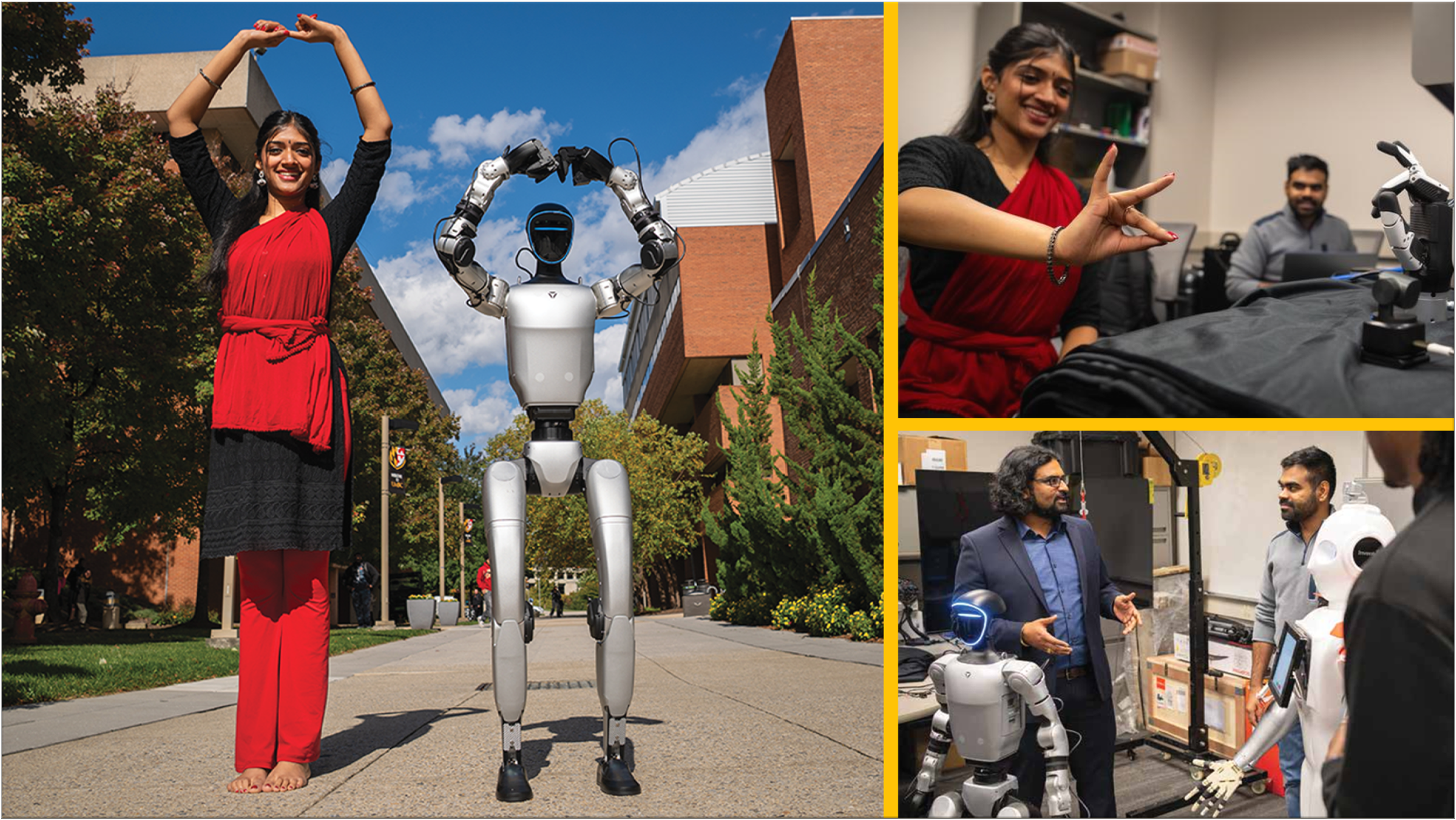
One of the most meaningful directions of my research has been inspired by something deeply personal, deeply cultural, and deeply human: the elegant hand gestures — or mudras — of Bharatanatyam, a classical Indian dance form. In our lab, we study how these structured “alphabets” of hand movements can inspire superhuman movement representations for robots, wearable exoskeletons, and rehabilitation technologies.
The idea is both scientific and artistic: just as language is built from alphabets, human movement is also constructed from a finite set of coordinated movement primitives or synergies. Bharatanatyam mudras provide an extraordinary real-world example of expressive, efficient, and highly structured hand coordination refined over centuries.
We are now translating these principles into intelligent robotic and rehabilitation systems that can help restore movement after neurological injury such as stroke paralysis. This work has attracted attention from multiple media outlets because it bridges neuroscience, robotics, AI, rehabilitation, and the arts in a uniquely human-centered way. One article describing this vision is: Nautilus – What Robots Can Learn from Classical Indian Dance How did biomedical engineering change your life or health?
Biomedical engineering changed my life by giving me a way to transform personal pain into purpose. Watching my mother suffer from stroke-related paralysis profoundly shaped my perspective. It was difficult to witness someone who once moved effortlessly suddenly struggle with even simple hand movements and daily activities. It was heartbreaking to see the very hand that taught me how to write, how to draw - paralyzed! That experience changed how I viewed the human body, movement, independence, and recovery.
Biomedical engineering gave me the tools to ask not only “Why does movement break after injury?” but also “How can we help restore it?” It transformed my career into a mission. What innovation made a difference for you or your family?
The innovations that inspired me most were rehabilitation technologies and neurotechnologies that help people regain movement, independence, and dignity after neurological injury. Even small improvements in hand function after stroke can dramatically improve quality of life — the ability to hold a spoon, button a shirt, hug a loved one, or write one’s name again. That realization stayed with me.
Today, our lab develops neurotechnologies, wearable robotic systems, VR rehabilitation platforms, and AI-driven movement decoding approaches inspired by the “alphabets of movement” embedded within the human nervous system and reflected beautifully in Bharatanatyam mudras.
The hope is not simply to build better robots, but to build technologies that help restore human capability and confidence. This work means everything to me because it sits at the intersection of science, humanity, culture, and compassion. As an engineer and neuroscientist, I am fascinated by how the brain coordinates movement.
As someone raised in India, I am inspired by how classical arts like Bharatanatyam encode centuries of understanding about human expression and control. As a son who watched his mother struggle with paralysis, I feel deeply motivated to contribute solutions that may one day help patients and families facing similar challenges. For me, this research is not just about robotics or AI. It is about preserving dignity through movement. It is about transforming culture into computation, art into rehabilitation, and personal experience into technologies that may help people recover pieces of their lives.