
Alexandria Carter
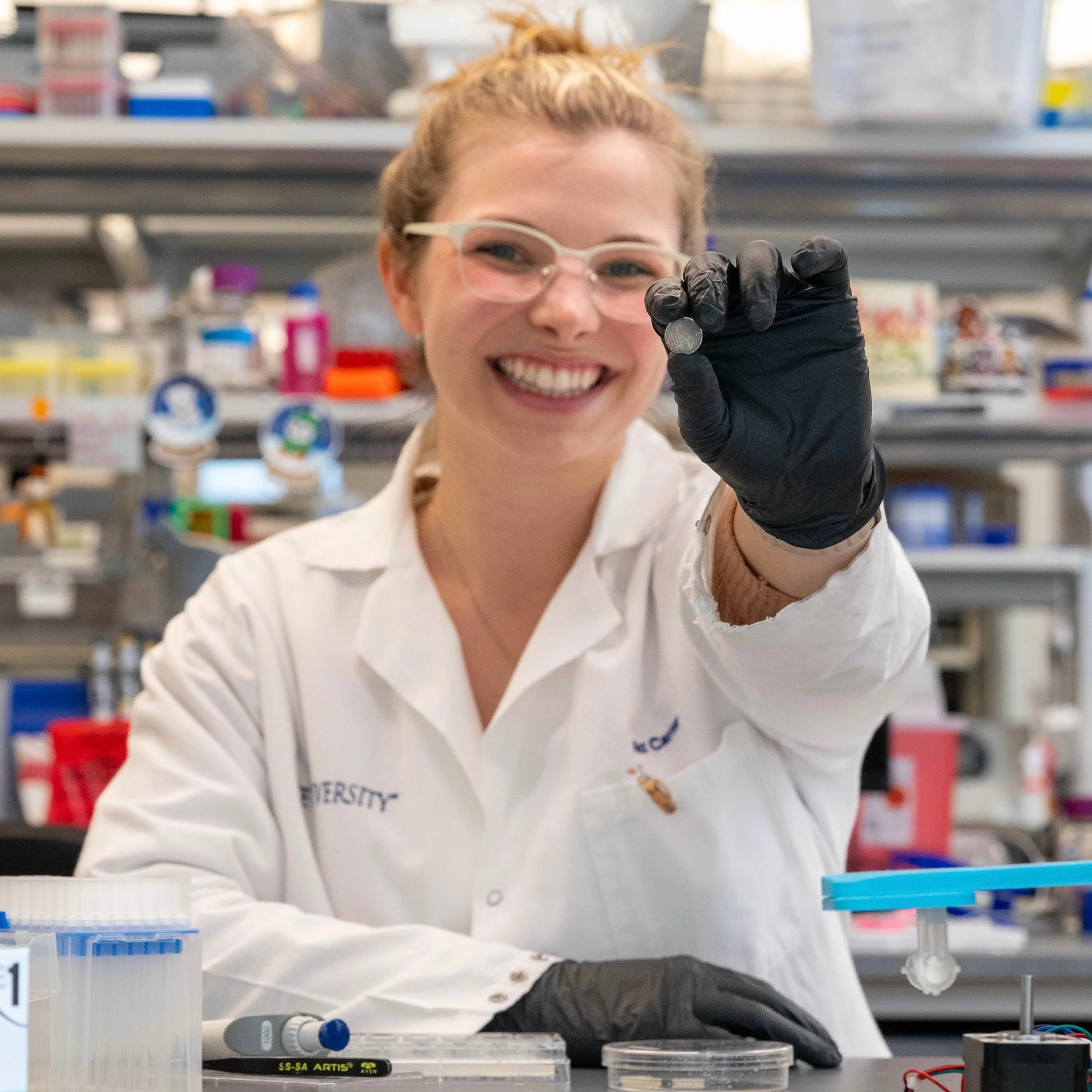
Ph.D. Student and Founder of Bionostic
Every year, nearly half of cancer patients who receive first-line chemotherapy don't respond to it. They endure months of side effects from a treatment that isn't working and lose precious time that can't be recovered.
As biomedical engineers, our team is building a tool to change that. As a platform developed at Rice University, ATLAS, the Advanced Tumor Landscape Analysis System, uses a small piece of a patient's own tumor biopsy to grow miniature 3D models of their cancer in the lab. These models mimic how a real tumor behaves in the body, and the implications are twofold.
As a research tool, ATLAS reveals how the tumor's surrounding environment shapes its resistance to therapy, opening new targets for drug development.
As a diagnostic tool, it puts clinicians one step ahead of the cancer, enabling treatment decisions grounded in each patient's biology rather than population averages. This is what personalized medicine looks like in practice: not a one-size-fits-all protocol, but a living test of your tumor, matched to your treatment, before the clock starts running.
Biomedical engineering and the innovative community that has built this field make such breakthroughs possible, and it could change what a cancer diagnosis means for millions of people.