

A soldier's injury sent him back to a family workshop to build his own wheelchairs.
Built by Necessity: Rory Cooper
Rory Cooper holds more than 40 U.S. patents. He's in the National Inventors Hall of Fame. He's received the National Medal of Technology and Innovation. Ask him where his story starts, though, and none of that comes up.
"Necessity," he says.
A Soldier's Fix
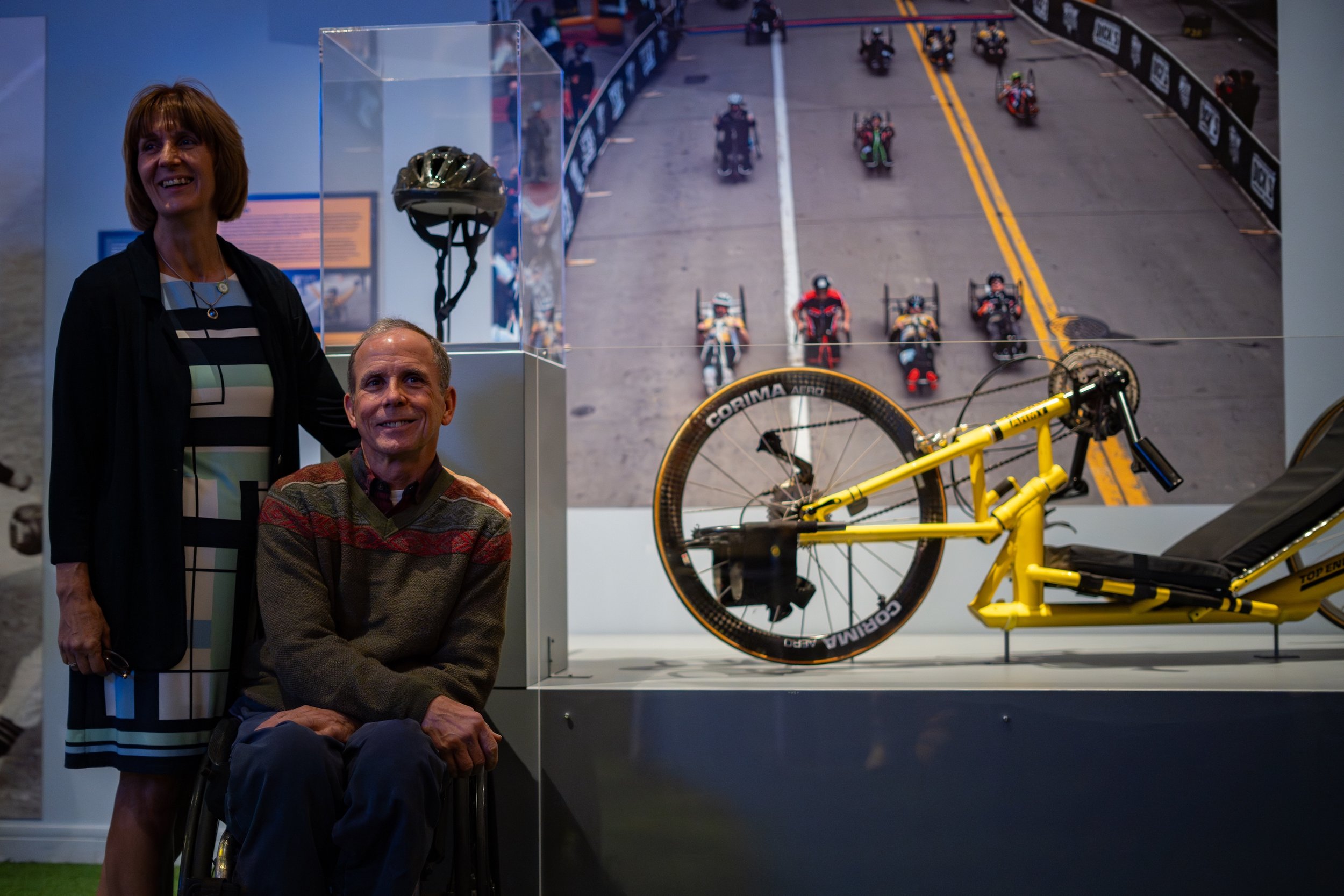
Cooper was a young Army sergeant stationed in Germany in 1980 when a bicycle accident left him paralyzed from the waist down. Wheelchair technology at the time was primitive. Chairs were heavy, unreliable, and built with no particular urgency to work well.
Upon his return to the United States, he enrolled at California Polytechnic State University, San Luis Obispo, and ran straight into a problem. His standard-issue wheelchair weighed 80 pounds of chrome and steel, making it nearly impossible to maneuver across campus. He'd grown up tinkering in his family's auto shop, and that instinct kicked back in. He built his own chair that was ultralight, assembled by hand, and sized to his own frustration.
It was the first of what would become dozens of inventions. By the time he finished a Ph.D. in electrical and computer engineering at UC Santa Barbara, he had already spent years solving problems nobody had assigned him.
He joined the University of Pittsburgh in 1994, and immediately founded the Human Engineering Research Laboratories, in partnership with the U.S. Department of Veterans Affairs, where nearly everything that follows was built.
One Frustrated Person, One Industry-Changing Product
One time, Cooper had a client with cerebral palsy who couldn't reliably drive a power wheelchair. Controllers back then were analog and tuned by feel; the same way old stereo equalizers were tuned by ear. Getting one calibrated for someone with tremor and spasticity, Cooper says, "was, in many ways, just luck."
So, he helped build the fix: one of the first digital controllers for power wheelchairs, using pressure sensing and algorithms to compensate for hand and arm impairments that could otherwise render intendent mobility ineffective or cause a crash.
He still calls it "probably one of my most successful inventions." Digital controllers with compensation algorithms are now standard across the industry.
It's a pattern his career repeats often: one person has a problem, and he designs a tool to help.
His Own Body, the First Prototype
Some of those inventions have come from his own frustration. Cooper raced wheelchairs competitively and got tired of burning his arms on the wheels every time he pushed.
"If I'm cutting myself," he remembers thinking, "I must be slowing the wheels down, too."
So, he designed fenders now used by Paralympic racers everywhere, including the SmartWheel, a force-sensing device.
Studying racers also taught him something bigger: they didn't get the carpal tunnel and rotator cuff injuries that plagued everyday wheelchair users. The difference was in how they pushed. That gap became years of ergonomics research, and eventually the Natural-Fit and Surge Handrims, which are ergonomic push rims designed with a wider surface and a contoured thumb slot to cut the force needed to grip and push.
A later partnership with Yamaha produced power-assist wheelchairs, adding a small motor to ease the strain on a user's shoulders.
"I Want That. Give Me That."
Not every invention was built for the person using it.
Cooper's team built a robotic system pairing a powered wheelchair with a powered bed, meant to transfer someone in and out of bed without the awkward, painful pulling caregivers usually done by hand. It was designed for both the caregiver as well as for the person in the chair.
The team brought a prototype to a long-term care facility to test it. One wife, visiting her husband, tried it out. She asked a lot of questions, all of which they answered. She
She left. Cooper figured that was the end of it. An hour later, she came back. This time with her husband's physician.
"I want that," she told them. "Give me that."
There was only one prototype in existence. The team scrambled, working with a small manufacturing partner to build a second unit and get it into her hands. Not long after, she brought her husband home. He had been living in the facility for years.
"That had a lot of impact on us," Cooper says. "And obviously on that couple, as well."
Everywhere, and Nowhere You'd Notice
Zoom out, and Cooper's field, biomedical engineering, disappears into the background of daily American life — which, he says, is the point. Curb cuts. The beeping crosswalk signal. Cruise control, invented by a blind engineer tired of being jerked around by inconsistent drivers. The power-sliding doors on minivans, first built for parents and people with disabilities alike.
It's exactly what American Health Discovery — a campaign celebrating American health innovation and the biomedical engineers and breakthroughs that have kept the country healthy and thriving — exists to put in the spotlight.
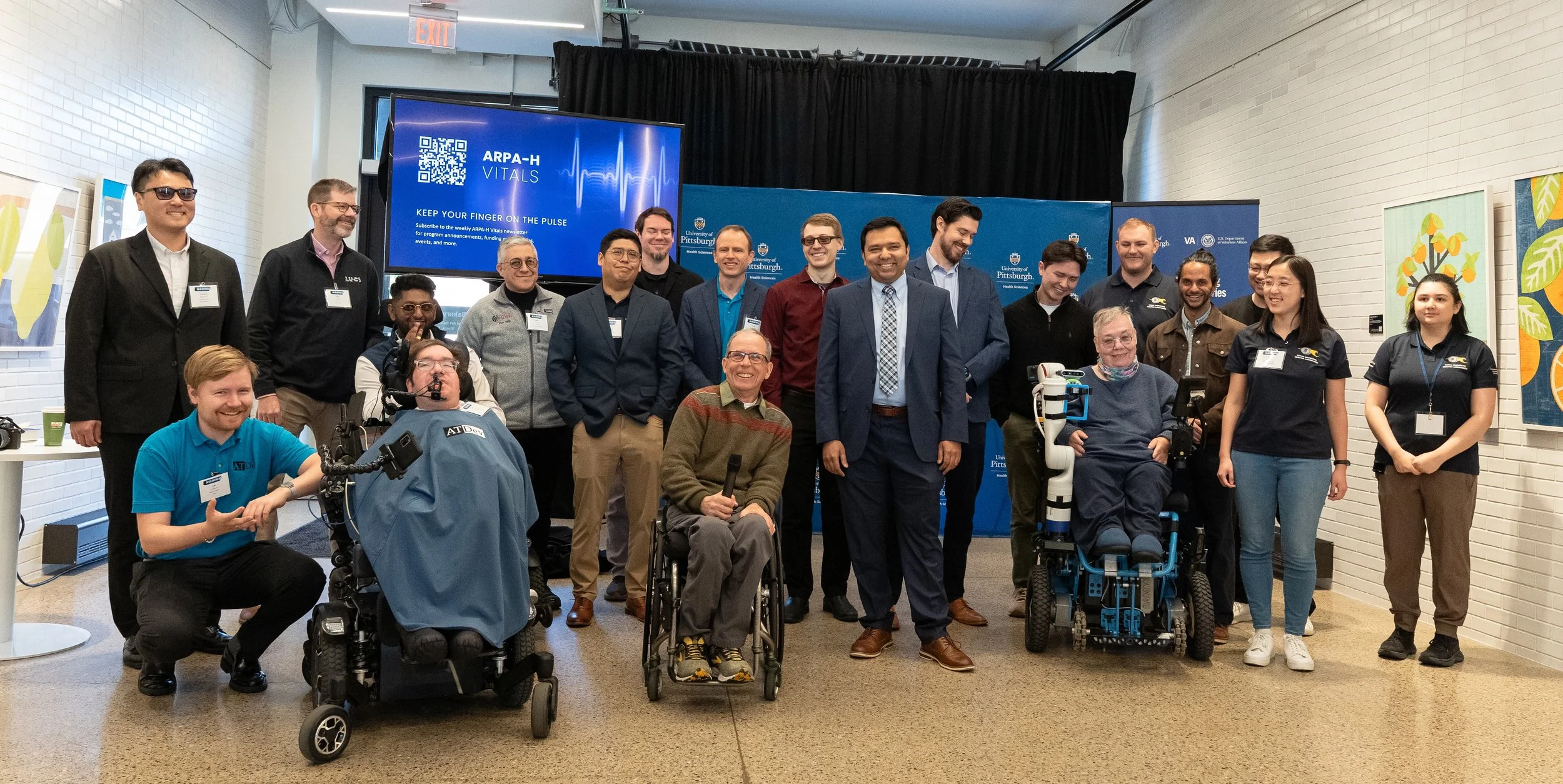
Today, Cooper’s lab runs about 70 people deep, with corporate partners like Amazon, NVIDIA, and Meta. He's still its Founding Director, and now also Pitt's Associate Vice Chancellor for Research for STEM-Health Sciences Collaborations, holding the FISA & Paralyzed Veterans of America Chair as a Distinguished Professor.
The reach and impact of Cooper’s work is massive and far-reaching. A few years ago, on a trip to Colombia, someone asked him at dinner whether his work had ever actually made it to the country. Just then, a man was getting into his wheelchair in the parking spot beside them.
Cooper didn't miss a beat.
"How about that guy right there?"